

This series of blogs in our From The Archives series is
intended as a resource for schools and local residents who are
interested in researching local history. We are very happy to help
schools with access to relevant materials. However, the images that are
reproduced here should be assumed to be the copyright and may not be
reproduced without license from the archives and commercial use is
therefore strictly prohibited.
If you live in Wandsworth and think of Wimbledon you think of
Wimbledon Park Road and most people assume it has been there for all
time. Wimbledon Park Road is, in fact, a creation of John August
Beaumont and his Wimbledon Park Estates company. John Corris’ 1787 Map
of Wandsworth shows no such road. The road pretty much follows the
course of ‘The Footpath from Wimbledon to Wandsworth’ that is marked on
The John Corris map. Although, curiously, it stops where the footpath
reaches the South Field at Clay Shot. In real life, the footpath is
shown on other sources starting from Merton Road and tracking the path
of Southfields Road, sometimes called South Field(s) Road to confuse
matters. 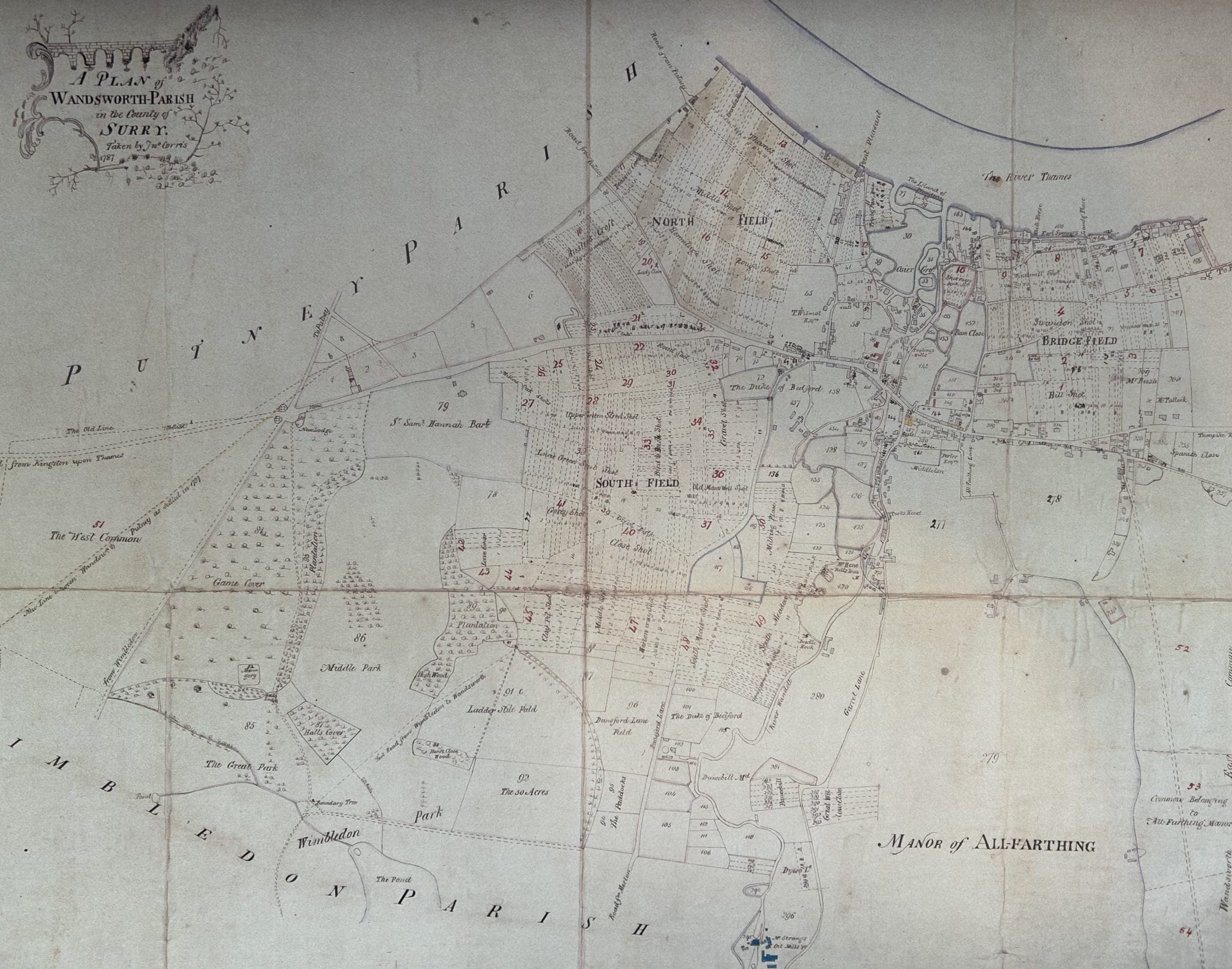 Excerpt from
John Corris’ 1787 Map of Wandsworth produced for Earl Spencer – British
Museum – via Wandsworth Historical Society
We can see on a deed dated 1851, in which John Augustus Beaumont is
selling a parcel of land, that Beaumont was intending to create a ‘New
Road’ across his Wimbledon Park Estate which leaves Merton Road and
then approximately follows the historical footpath that predated
Southfields Road and led to Wimbledon Village.
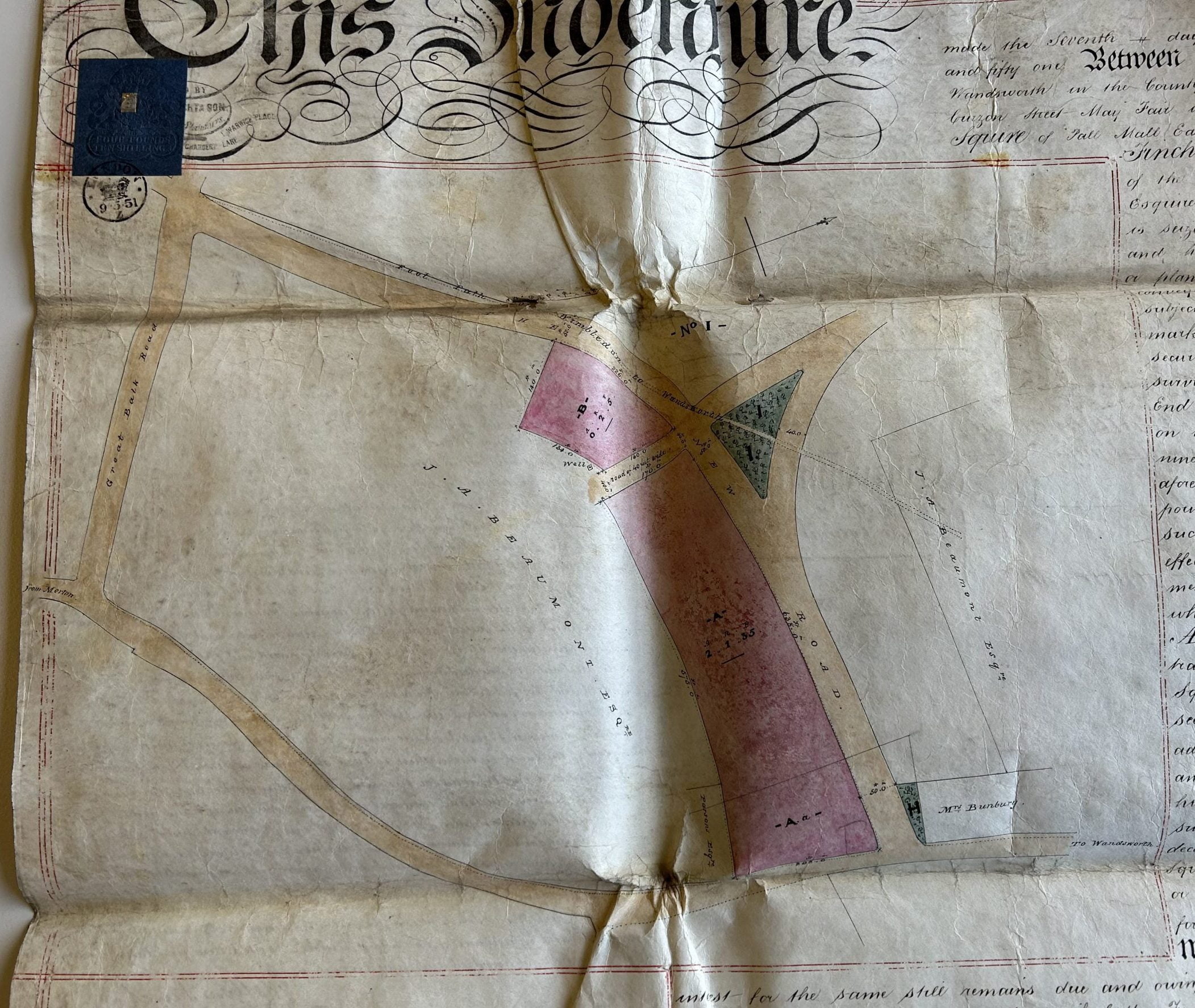 Deed between John August
Beaumont and Alexander Henderson dated 7th May 1851 showing Wimbldeon
Park Road as New Road – 2262/3/1 – Reproduced by permission of Surrey
History Centre The road then appears to have acquired the name
The Wimbledon Park Road the following year – appears as until the Metropolis
Management Acts of 1855 came into force the naming of roads was
quite arbitrary. Post the Acts coming into force in 1855 the
Metropolitan Board of Works had to approve all new road formations. A
few sample files exist in the London Metropolitan Archives but sadly the
vast majority were weeded out by Greater London Council archivists
before the archives came to be in the hands of the City of London
Corporation. 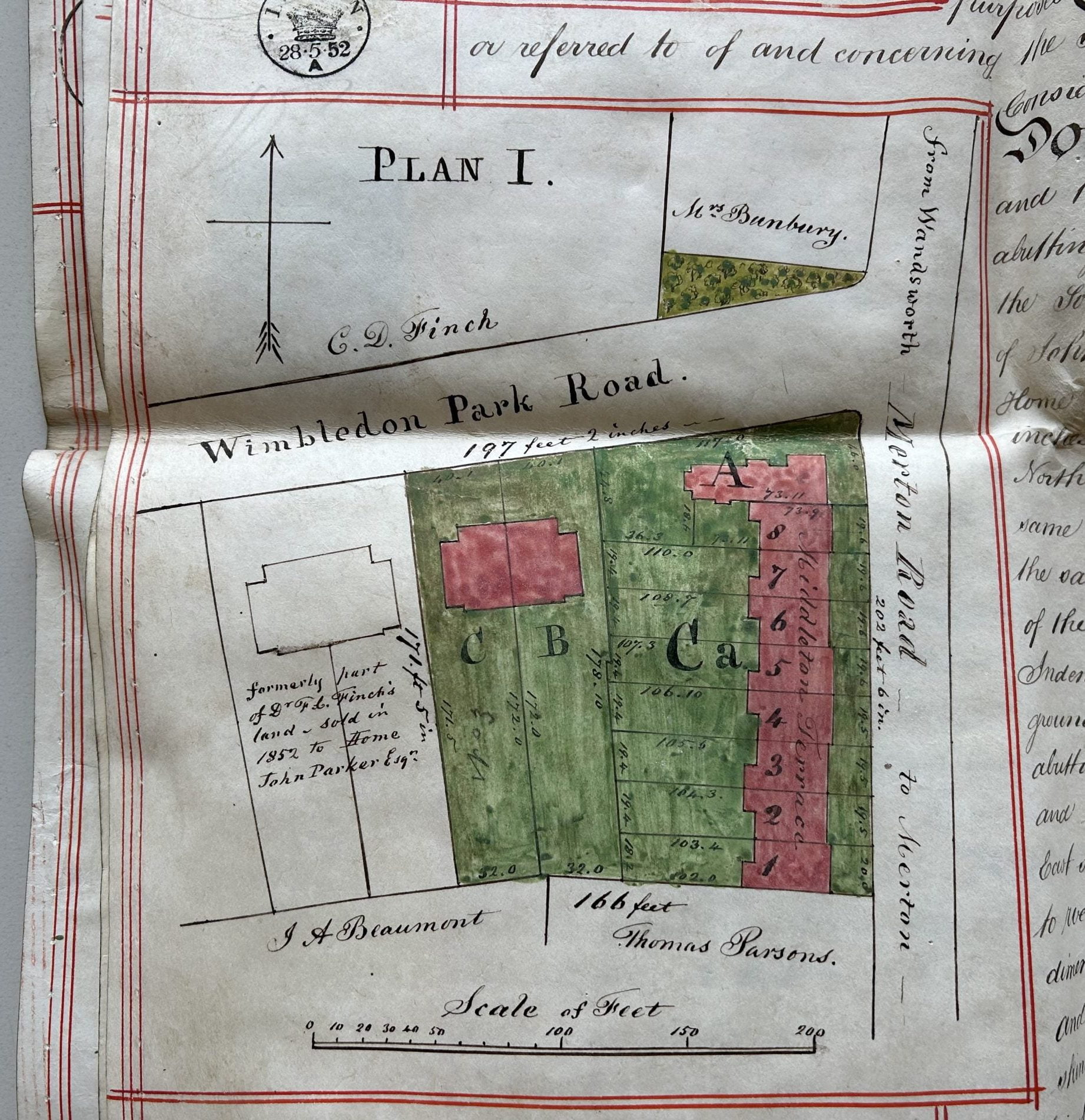 Deed between
Frederick Cotton Finch and William Pearl stamped 28th May 1852 showing
Wimbldeon Park Road named as such – 2262/3/6 – Reproduced by permission
of Surrey History Centre and something else Rather
uniquely we can see both side of the transactions with Cotton Finch
because the oversight committee of The County Fire Office [CFO] was
keeping a close eye on the situation as well as keeping voluminous
records and making period reports to The Board of Directors of CFO.
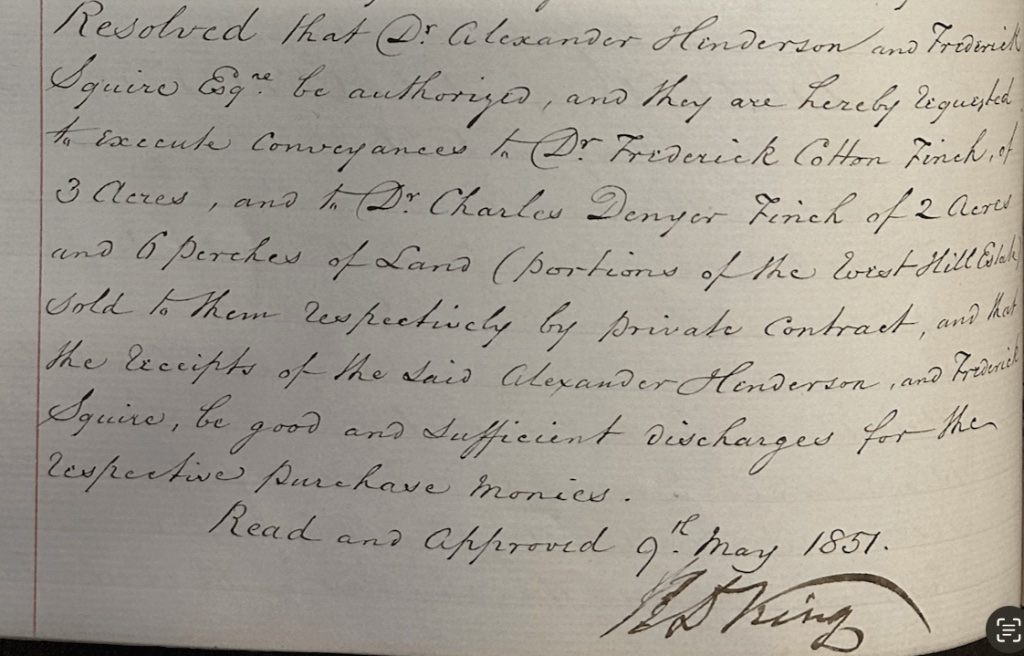
Extract from CFO Bard minute book 2nd May 1851 p377. By kind permission
of RSA Group.